kratom alkaloids, mitragynine extract, 7-hydroxymitragynine potency, is 7-oh stronger than mitragynine
If you are navigating the rapidly evolving world of specialized botanical extracts, you have undoubtedly run into two terms: Mitragynine (MIT) and 7-Hydroxymitragynine (7-OH).
Because both compounds originate from the leaves of the Southeast Asian Mitragyna speciosa (kratom) tree, many casual consumers treat them as interchangeable synonyms. This confusion is a significant mistake.
While they share a botanical home, Mitragynine and 7-OH feature vastly different chemical profiles, potencies, and behaviors inside the human body. Understanding the distinction is the key to selecting the right product and protecting your personal wellness.
Natural Abundance: The Heavyweight vs. The Ghost
The first fundamental difference between these two alkaloids lies in how much of them actually exists in the natural plant.
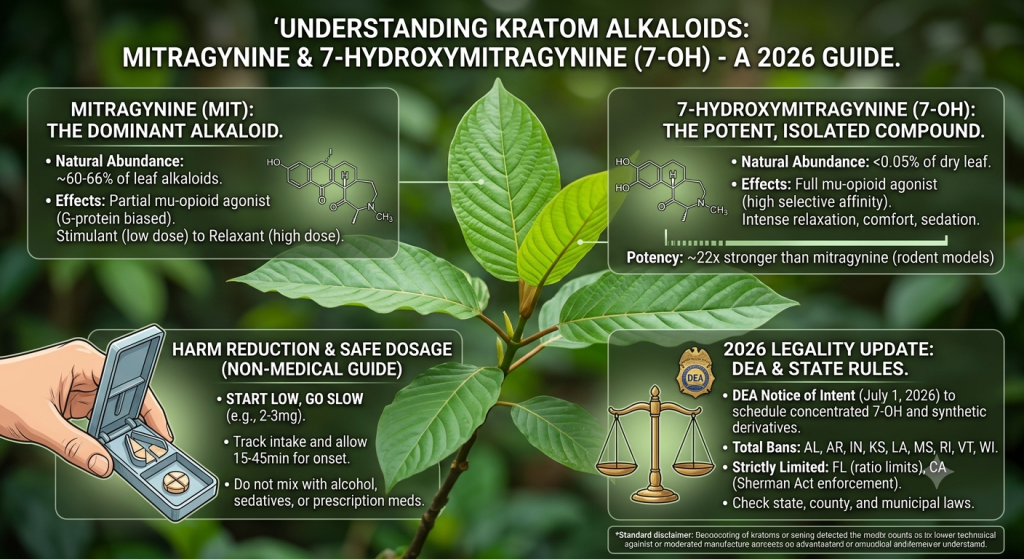
- Mitragynine is the undisputed heavyweight champion of the raw kratom leaf. It is the most abundant active compound in the plant, routinely making up anywhere from 60% to 66% of the total alkaloid content by volume. When you drink traditional kratom tea or swallow raw leaf powder, you are primarily consuming mitragynine.
- 7-Hydroxymitragynine (7-OH), on the other hand, is practically a ghost in nature. In a raw, dried kratom leaf, 7-OH exists in microscopic trace amounts—typically less than 0.05% of the dry leaf weight.
Interestingly, much of the compound is synthesized after consumption, as mitragynine is naturally converted in vitro in both mouse and human liver preparations to the much more potent 7-hydroxymitragynine metabolite
However, modern retail products shift this dynamic completely by isolating and concentrating 7-OH into standalone tablets and liquid shots, bypassing the body’s natural metabolic speed limits.
Receptor Binding and Pharmacological Potency
Why does such a tiny trace compound get so much attention? Because, from a neurological perspective, 7-OH punches far above its weight class.
Both alkaloids target the brain’s mu-opioid receptors, but they turn them on with vastly different levels of force:
Mitragynine’s Profile
Mitragynine acts as a selective partial agonist at the mu-opioid receptors. Crucially, it is a G-protein-biased agonist, meaning it activates the receptor pathways responsible for comfort and mood enhancement without heavily triggering the beta-arrestin-2 pathway—the biological mechanism associated with classical opioid side effects like severe respiratory depression. Furthermore, mitragynine binds to adrenergic and serotonergic receptors, which explains why low doses of standard kratom leaf provide a clean, coffee-like energy boost.
7-OH’s Profile
7-OH binds to the same mu-opioid receptors, but with a significantly tighter, more selective affinity. Lab assays and rodent models indicate that 7-OH is roughly 22-fold more potent than mitragynine and can exceed the baseline functional potency of classical compounds like morphine. Because it targets the opioid system with much greater efficiency, isolated 7-OH completely drops the stimulant characteristics of mitragynine, trading them for rapid, intense physical comfort, profound relaxation, and heavy sedation.
Direct Comparison: 7-OH vs. Mitragynine
To help you visualize how these two powerhouse plant compounds stack up against each other, review the comparative breakdown below:
| Feature | Mitragynine (Standard Kratom) | 7-Hydroxymitragynine (7-OH) |
| Primary Botanical Role | Dominant primary alkaloid | Minor trace alkaloid / active metabolite |
| Natural Concentration | High (60%+ of total leaf alkaloids) | Minimal (typically <0.05% of dry weight) |
| Primary Effects | Low dose: Stimulant & focus. High dose: Mild relaxation. | Immediate deep physical comfort, heavy relaxation, and sedation. |
| Receptor Selectivity | Broad (Opioid, Adrenergic, Serotonergic) | Highly selective (Mu-Opioid receptor) |
| Tolerance Risk Profile | Moderate; builds slowly over prolonged use. | High; rapid receptor downregulation if used consecutively. |
| Common Formats | Raw powders, capsules, full-spectrum extracts | Disks, chewable tablets, isolated liquid shots |
Which One Suits Your Needs?
Because their effect profiles are so distinct, choosing between a mitragynine-dominant product and an isolated 7-OH formula depends entirely on your specific objectives.
- Choose Mitragynine (or Traditional Leaf) if: You are looking for a daily or sustainable wellness companion. If your goals involve boosting morning focus, sustaining physical stamina during a workout, or achieving mild, balanced relaxation at the end of a long workday, mitragynine’s complex, multi-receptor profile provides the versatility you need without overwhelming your system.
- Choose 7-OH if: You require targeted, episodic relief or deep, uncompromised relaxation. Because 7-OH is a specialized extract, it should be reserved for situational use rather than a daily regimen. It is best utilized when standard options fail to provide the heavy physical comfort or sleep support you require.
The Importance of Clean Sourcing
As federal and state regulations tighten around highly concentrated extracts, the line between high-quality botanical science and irresponsible manufacturing has become vital.
When shopping for either compound, verify that your vendor provides transparent, batch-specific Certificates of Analysis (COAs). Ensure that your mitragynine extracts are completely free of artificial, synthetic 7-OH spikes, and make sure your standalone 7-OH products are cleanly derived from authentic plant materials without the presence of toxic residual solvents or illegal synthetic additives.
Knowledge is your best protection. By understanding the profound difference between the steady balance of mitragynine and the targeted power of 7-OH, you can customize your botanical journey safely, effectively, and responsibly.
Standard Disclaimer
These statements have not been evaluated by the Food and Drug Administration (FDA). Neither mitragynine nor 7-hydroxymitragynine is approved for medical use. These products are not intended to diagnose, treat, cure, or prevent any disease or health condition. Always consult a healthcare professional before altering your wellness routine. Strictly prohibited for individuals under 21 years of age.